Today’s topic was writing Linux kernel modules with Rust. For a language that will enter the kernel in the future, it is necessary to understand it early.
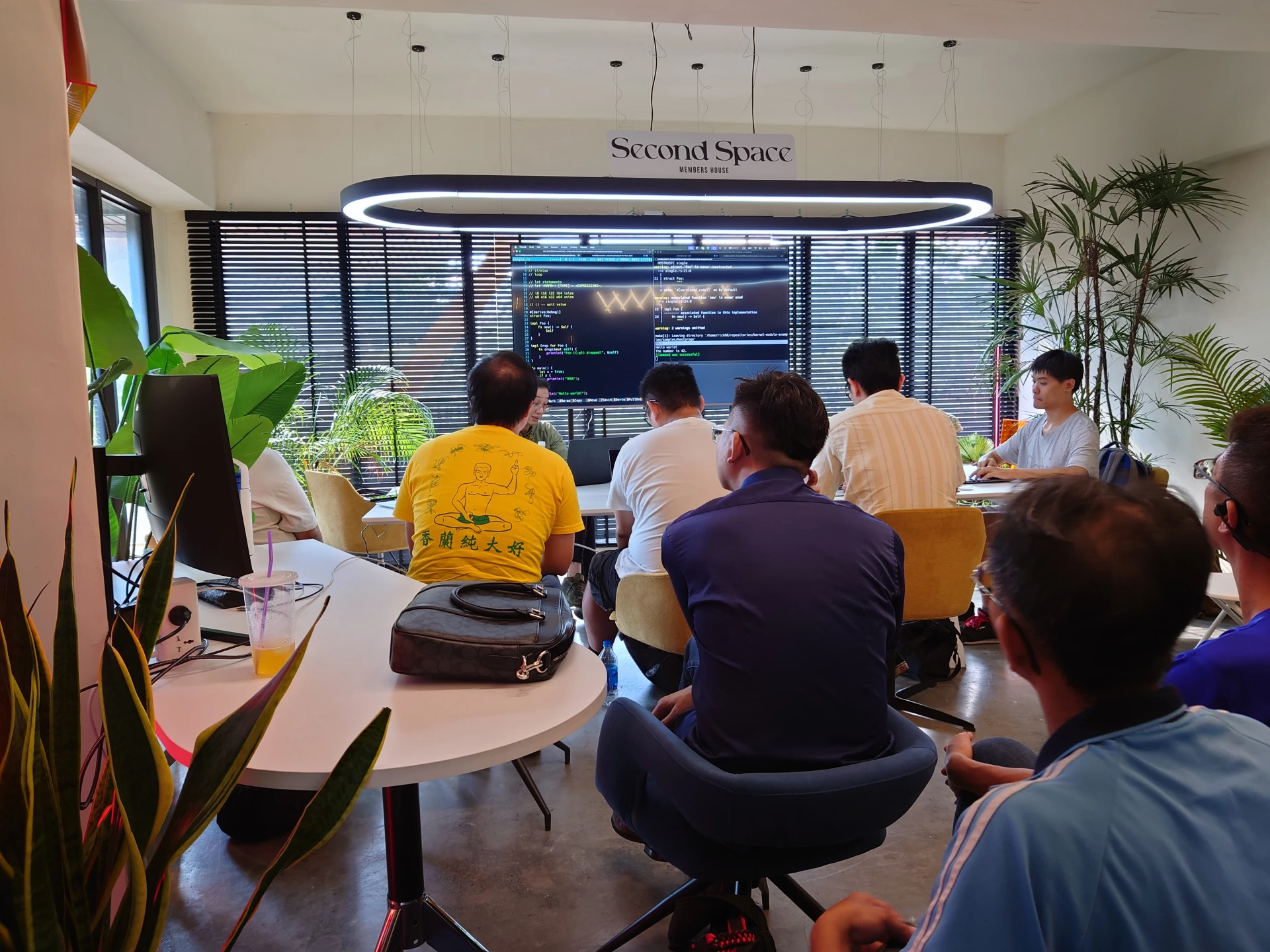
Recording: KaLUG meetup 2509 - Rust 的奇妙冒險:Hello Heaven (Rust for Linux)
When attending KaLUG this time, it was also my first time seeing an actual NixOS user in real life… I have always wanted to try this system, but I am very worried about whether I would fall into a cult I cannot escape.
After all, declarative reproducible systems are not mainstream. Are you pretending Ansible does not exist? For cross-distribution package installation solutions, there are currently Flatpak, AppImage, Snap, Nix, Guix, and so on. There are even stranger solutions like Podman + Distrobox. pip and npm are not included because they are not designed specifically for packaging Linux software. Although each implementation differs, all of them can achieve cross-distribution software use. One situation for using cross-distribution package installation solutions is: wanting to install unstable packages on a stable system, such as having Debian Stable’s stable system and Arch Linux’s latest packages. Which solution to choose depends on which functions users care about more. If you do not care about containerization and want contact without a sleeve, use AppImage or Nix. Nix is more suitable for developers, and it feels like the Homebrew experience on macOS. Its package management mechanism also guarantees that software will absolutely not destroy dependencies, as if statically linked, and can 100% roll back. If you can accept some container permission restrictions, there are many choices. There is no need to rush to decide which is better. In the end, it still depends on which format developers prefer, which they are more willing to package, and whether users can easily obtain the software. In my view, Flatpak and Snap are more user-friendly, while Distrobox is purely a developer tool, and like Nix, it requires high-level skill to use.
Hawawa, the laptop brought by sponsor OCF Open Culture Foundation finally let me touch a real Framework laptop. The factory Framework 12 brought by QA is one of the laptop brands with the best Linux compatibility besides ThinkPad, almost requiring no extra drivers. With only one screwdriver, the keyboard can be removed from the front, exposing all internal structures (although it has a bit of FNAF body-horror feeling). All parts are modularly designed and freely replaceable.
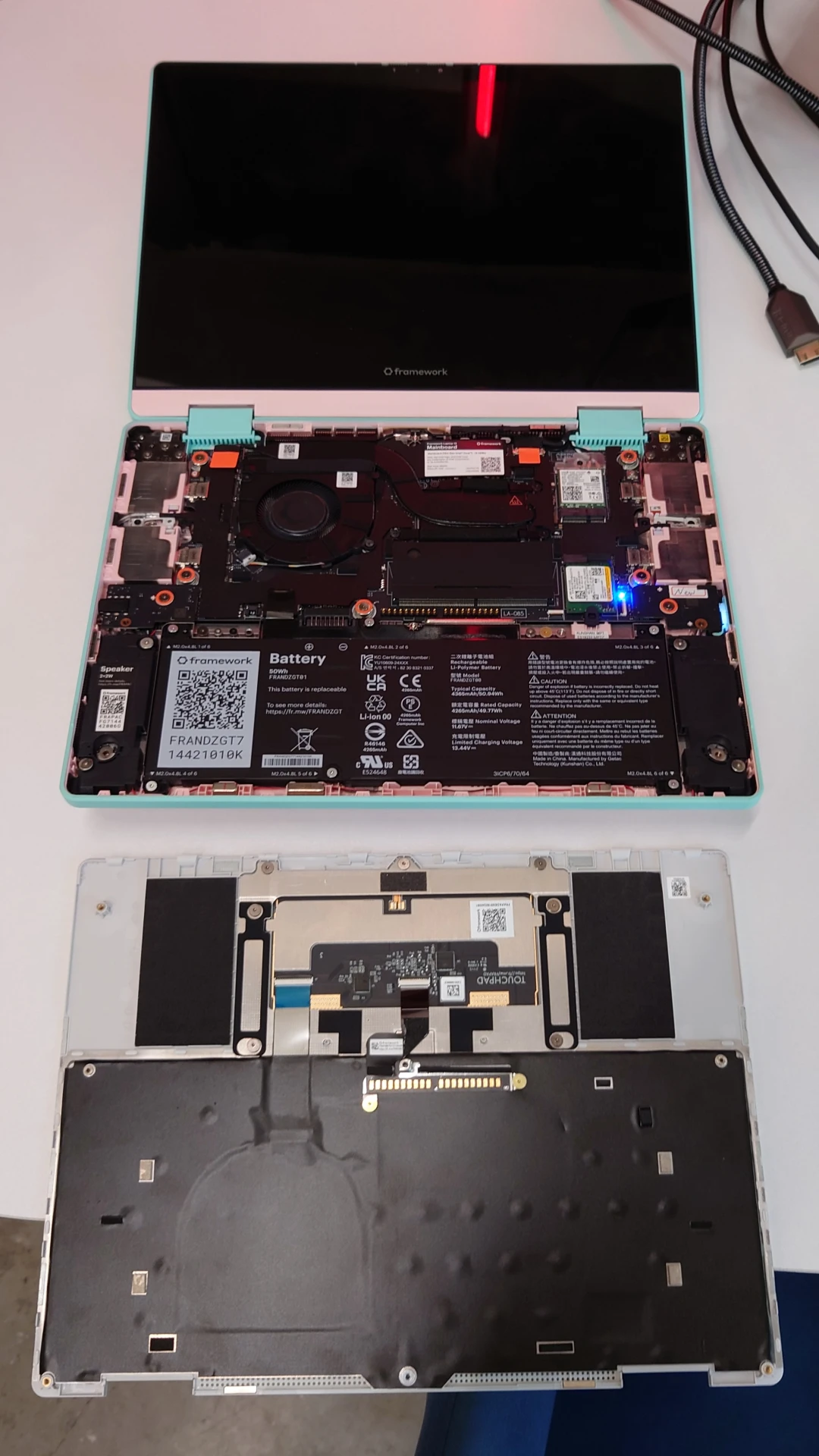
Although this machine is a bit thick, considering it can rotate 360 degrees and has a touchscreen, it is actually not heavy. If I have money in the future, I definitely have to buy one. Yes, if I really have money. By the way, after recently listening to the Rust for Linux kernel talk (X) evangelism conference (O), I learned that Rust entering the Linux kernel is already an inevitable trend. From originally only being a language for writing kernel module drivers, to penetrating Rust’s interface layer with C, and counterattacking into the kernel interior!!! Although there is still a lot of resistance.
Today was my first time attending this event. I saw it in a Facebook group and gathered the courage to try attending. The host, whom everyone calls Shawn, quickly noticed the official FreeBSD T-shirt I was wearing and warmly greeted me. It was more interesting than expected. This really is a meetup that fits my taste!