This is a rant. A writing style that occasionally appears in the Linux Reddit community.
The systems I currently use are Arch Linux and Ubuntu 22.04.
Sometimes I feel that if I want to play with a computer and do some non-development tasks, using a Linux desktop system is torturing myself.
First, listen to a song.
1. The Case of Android and ChromeOS #
When I am bored, I go look at the Android official website homepage. It says, “Android, a platform constantly challenging every possibility.” This sentence is indeed correct.

If Android and ChromeOS are counted as Linux systems in a broad sense, then they truly are the best graphical-interface Linux distributions.

The hot take that “Android is the best graphical-interface Linux distribution” was originally a clever answer I saw on Zhihu. If we think more broadly, it seems to be true.
Although it is very frustrating, I really have to say that after playing with many Linux distributions, I feel that, as free software, Android’s graphical interface is more general-purpose than ordinary desktop Linux distributions. It is unmatched in touch control, and connecting a keyboard to a tablet is also acceptable. Google then uses ChromeOS to strengthen Android’s weaknesses on computers, making it into a system usable on the desktop.
The Android experience I am talking about now mainly refers to the stock system, supported by Google or third-party ROM developers, so there is no fragmentation or abandonment problem.
In my humble opinion, Android’s style has already been finalized by Google and adapts to the resolutions of different devices. Although the Material You design language takes some getting used to at first, it is a good choice that can adapt to all kinds of screen sizes.
And after Android 12, it no longer has that geeky interface feeling of Android 5 to Android 11… Google has indeed developed its own set of aesthetics.
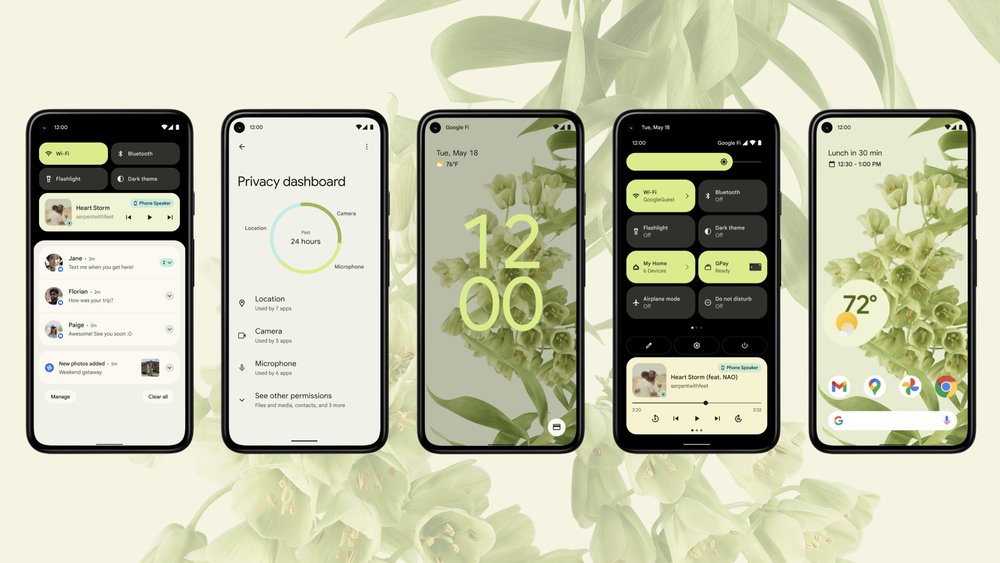
As Linux, Android uses APK to unify the installation package format. Ordinary users can easily get started, turning phones into something modern people become addicted to.
Android can also run advanced development tools. For example, running Termux on Android gives access to desktop software; running Crostini on ChromeOS gives a Linux container. Development environments like these are built on Linux’s powerful adaptability.
Thus, Android and ChromeOS have become highly scalable systems that are simple and easy to use in daily life, while also having tool support when advanced functions are needed.
Removing Root from Android may be understandable. After all, not everyone should casually touch system files. And Google not completely blocking the path of flashing ROMs is probably one reason developers like modifying Android devices. Although Android as free software is a sugar-coated poison, and Google understands very well how to bypass the GPL and stuff proprietary software into the system, Android without GMS is painful. But Android still preserves open source characteristics, so I prefer Android over the arbitrariness of iOS.
It would be great if the advantages of Android and ChromeOS could merge in the future. Not Fuchsia OS, but a truly all-powerful system that transforms on demand: a tablet becoming a laptop, a foldable phone automatically changing form, and so on.
Although ChromeOS’s ceiling is still lower than Windows, it is enough to get things done. Development work may still require a real computer system, and although Windows is awful, the stability of its interface still surpasses many Linux distributions by far. Windows 11’s reskin has also made its texture better.
2. The Case of the Many Linux Desktop Distributions #
Whether Linux desktop distributions are usable is a subjective issue, and there are many complex factors behind it.
The graphical interfaces of the many Linux desktop distributions are not very mature (polished). Here I will use Ubuntu, which is generally considered most suitable for ordinary people, as an example.
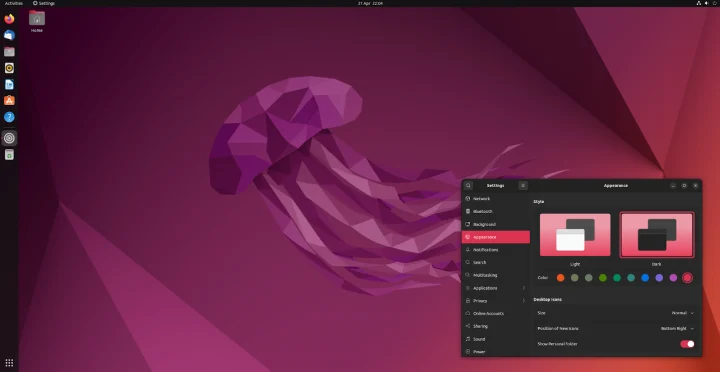
Although I am talking about Ubuntu, this actually includes grievances about other distributions too.
Even by Ubuntu 22.04, you still need to use commands from time to time to handle tasks. This may also be related to its adoption of the minimalist but crippled-by-default GNOME. KDE can handle more things through a graphical interface.
So would switching to KDE solve it? In terms of adjusting system settings, even with the YaST tool developed by SUSE working with KDE, it still feels marginal, because it still cannot replace the command line. Arrogant senior Linux users will even say that KDE plus YaST is less efficient than manually typing commands to edit files.
This is one very big problem: Linux users really must know what they are doing before touching system files! When using a computer, they also need network-administrator-level knowledge, knowing which packages can be installed without affecting the system.
Add to that the complicated installation methods for various Linux software (Snap, deb, Flatpak, AppImage, make install), the possible need to add third-party repositories, and inconsistent APP design languages (GTK, QT, Electron), and Ubuntu is still not that approachable.
When Ubuntu is recommended as a desktop system for ordinary people, it often appears in promotional language like “this system can revive your broken laptop for watching videos.” It is rare to hear people say it can replace Windows as a general-purpose system for daily work. I think the lack of proprietary software support such as Microsoft Office is a secondary problem. As said above, the graphical interface alone is immature, so how can the user experience be good?
In terms of ease of use, even for purposes such as watching videos and rescuing old computers, Linux desktop distributions are almost being surpassed by ChromeOS Flex.
Aside from poor proprietary software support, the Linux community also has internal wars from time to time. Ubuntu is blasted for not being humble enough (aggressively pushing Snap), and then the community still cannot produce a Linux desktop distribution that surpasses Ubuntu in influence, commercial support, and ease of use.
Everyone insists on boring philosophies and splits off a large number of Linux distributions. Although there is diversity, in some aspects it also turns the Linux community into loose sand, especially the graphical part. We care a lot about user choice. So what if the software interface is a little ugly? Otherwise, fork it yourself and contribute code.
Does the Linux desktop distribution world really practice the philosophy of free software 100%? There are many compromises! Plenty of people still use “Linux can also play closed source games and run Wine software” as selling points, to say nothing of Nvidia using its arbitrary power to force people to use proprietary drivers.

People who use Linux generally need the ability to debug manually. Developers and people with geek temperaments can probably adapt to this, but ordinary people will hesitate. I want it to Just Works, not to arm-wrestle the computer. When using Linux, there really is no way to use it mindlessly.
If even Ubuntu is like this, what about other desktop distributions? Under the shiny appearance, they are full of system errors. An article on Hacker News says: Linux is a complete mess that may likely never get fixed

Every time someone recommends trying some new distribution based on a cookie-clicker statistics site like DistroWatch, I feel very repelled. After actually using those distributions, although they may have new features or simply look pretty, who can comprehensively surpass Ubuntu? No. Even Manjaro and Fedora are still far behind. How dare you recommend those niche distributions to ordinary users? If you are short on contributors and need to recruit downlines, say that first.
Recommend Arch Linux? I only want to use a computer for entertainment and office work a little, and I still have to learn how to handle the system with commands? Not to mention that if you do not update for a long time, you have to be terrified. Ubuntu major version upgrades can explode, and rolling-release updates without version separation can explode just the same.
In terms of influence, commercial support, and ease of use, Ubuntu can only be the least-bad choice for desktop Linux right now.
3. Good Graphics, Good Terminal #
Combining the Android and ChromeOS development tools I talked about above, these are the features by which they beat the many Linux desktop distributions:
- Under ordinary circumstances, they can be used smoothly, and entertainment is no problem
- Running development tools only requires a little thought, instead of being like ordinary Linux desktop distributions, where daily use feels as cautious as developing an operating system.
Since ChromeOS still does not feel like a computer system, then use Windows.
In recent years, Windows has begun launching subsystems, perhaps to cater to this trend of composite operating systems. Linux is great, so we integrate it, and continue using our high-quality graphical interface. Only use commands when truly necessary, and do both entertainment and development without delay! Many people praise Visual Studio Code with WSL Docker.
I am not very familiar with macOS, but I think its situation is caught between Windows and Linux. It is neither as general-purpose as Windows nor as free as Linux, and it is tied to hardware (ignoring Hackintosh). I do not think it is a good operating system choice.
Seen this way, is ordinary Linux really strongest only when it is a text-only interface? Linux can quietly do things well in the terminal. As long as the graphical interface is not opened, everything will be fine.
Should we first have a good graphical interface before talking about benefits like development? KDE is already one of the top desktop environments on Linux, but it is still not good enough.
If you want a device that combines entertainment and development, it is still best to use Android, ChromeOS, or Windows as the main system. Linux, like FreeBSD, should stay inside the terminal.
…Never mind. For now I will continue using Arch Linux as my desktop system. My usage habits have already been tied down by Linux services. As long as I do not update the system all day long, I can use it with peace of mind for a while.