This is the sequel to 使用Linux系統二年.
Looking back from 2023 to now, my thoughts:
Seeing clearly instead makes things hazy
Freedom, too much freedom, instead makes me want to be a beast in a cage
After a long while, someone on the PTT Linux board again asked everyone what distribution they were using: 閒聊 2024你現在用的發行版是哪個呢?
In the end, I gave a conservative answer: Ubuntu.
If someone asks me which Linux distribution is suitable for beginners, in my article Linux distros for beginners, I still recommend the stalwart Ubuntu. Or at least something based on Ubuntu.
Because pressure from real life has made my thinking a bit more practical.
1. Main Integrated Air Corps #
Linux distributions have always had two major update models: one is stable version updates (point release), and the other is rolling updates (rolling release).
Let me talk about my changes over the past year. One of the biggest changes is that my main system switched back to Ubuntu LTS, returning to the pure white starting point. I want system software to be a little more stable and not update constantly.
With Arch Linux, if you do not update the whole system every month, installing software causes problems. Every software update creates small problems here and there, or the computer ACPI cannot shut down, plus the fucking Nvidia driver bugs.
Yes, no matter what controversies Ubuntu has, whether people say Canonical is in bed with Microsoft because of WSL or whatever, stop arguing. I have Keanu Reeves’s attitude: whatever you say is right, but I do not want to use a rolling-release distribution as my “main” anymore.
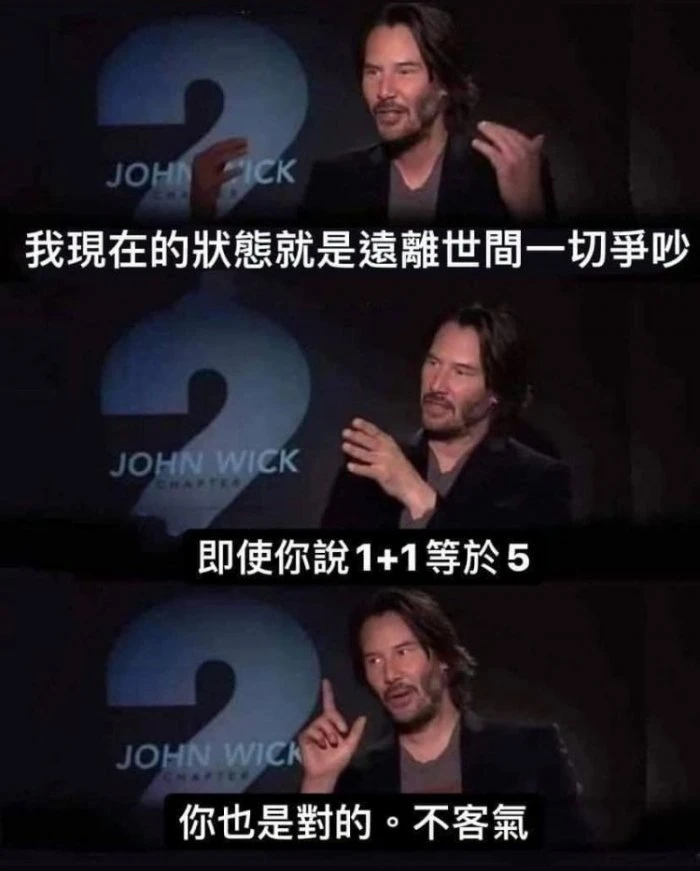
I could no longer stand the problems of rolling-release Arch Linux, so I returned to Ubuntu LTS.
Two years ago, for a boring reason like “it is dull”, I left my original companion Ubuntu and began distro-hopping. After staying on Arch Linux for a year, I eventually still chose this reassuring distribution. At the beginning of this year, I officially switched back to Ubuntu.
Ubuntu is not too niche, its style is not too radical, and many people use it. I have chosen to ignore the existence of Snap. But I still really hate the GNOME desktop, so installing KDE looks more pleasing to me.
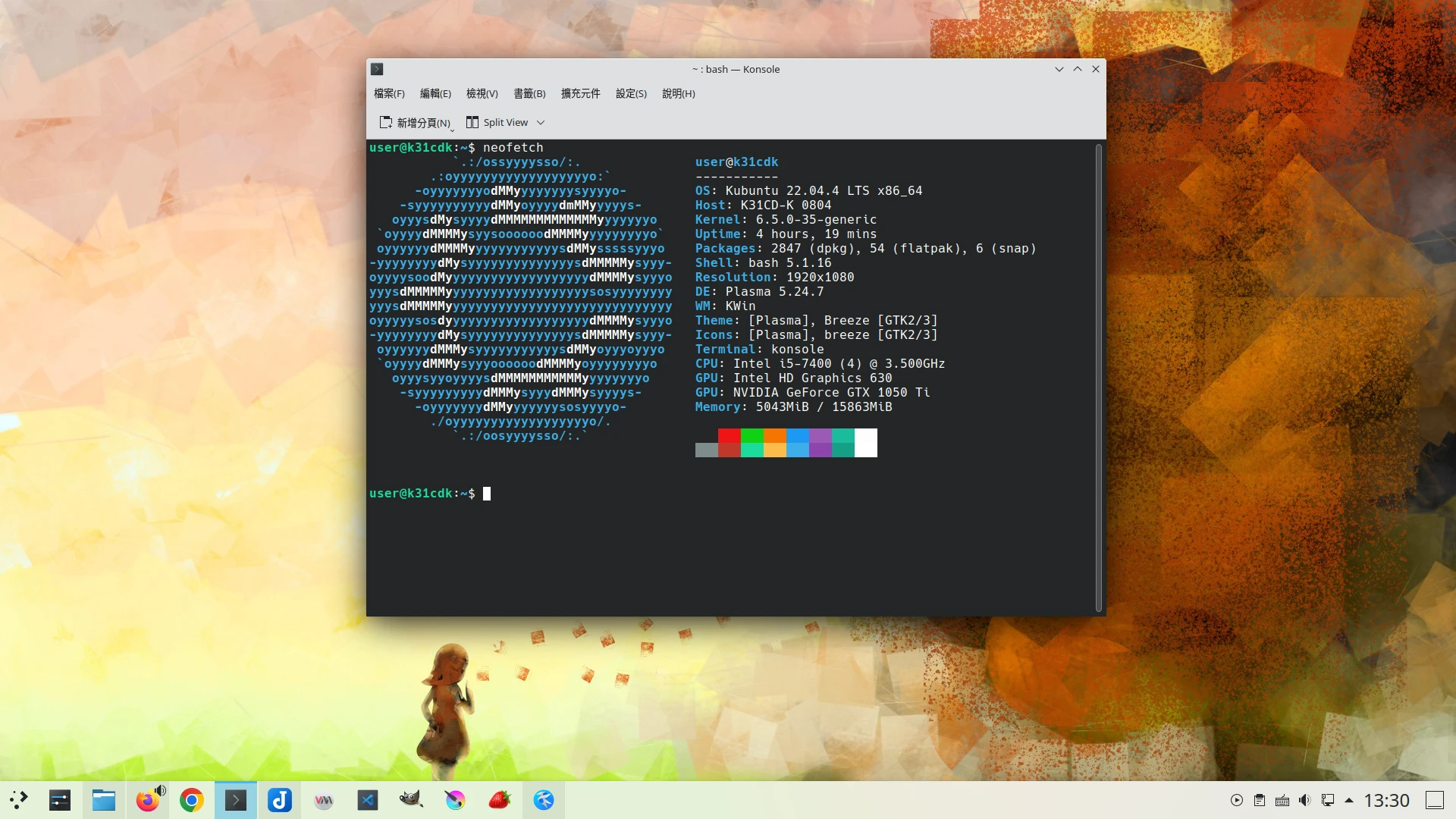
It does not matter if the desktop environment is older. As long as software less related to the system core gets updated often, that is enough. I try to use Flatpak and Distrobox container technologies to install APPs, getting the latest versions without breaking system stability. At worst, I can just compile manually.
Now that Flatpak technology exists, pursuing the latest software is a false issue. Point Release distributions naturally have their reason to exist. Hasn’t Canonical also used Snap and HWE kernels to bypass the problem of LTS systems supporting new hardware?
Because Linux software development often comes with no guarantee (THE SOFTWARE IS PROVIDED “AS IS”, WITHOUT WARRANTY OF ANY KIND), community developers maintaining distributions do not have the obligation of big tech companies to provide stability maintenance, and nobody will apologize. The system exploded after an update? Fix it yourself! Otherwise, at least write an issue report. If you do nothing, what are you yelling about?
If you want to avoid living under the fear of frequent system explosions, it is better to use Point Release distributions.
I locked myself back into the cage, tolerating the rules and restrictions of commercial distributions. I learned to follow APT rules (meaning running a pile of post-installation configuration scripts after installation), rather than the disorderly and chaotic Pacman (install and run).
Freedom, too much freedom, instead makes me want to be a beast in a cage
The immutable distros that have risen in recent years make me very tempted, but they are not mature yet. I will wait a bit longer. When they become popular enough to climb into DistroWatch’s top 10 ranking, I will consider switching.
2. New Vanguard Catapult Macross #
There was a relatively big change this year. After being tortured by Pine64’s immature product (PinePhone), and after failed attempts to simulate Linux servers in Termux, I finally obtained a development board in the true sense: “Raspberry Pi 5”.
I think this is a very worthwhile investment. Driver support is excellent, processor performance is decent, the community is large, and you can do whatever you want. Use it as an office computer, server, router, IOT project, or even explore the new frontier of Steam games on the ARM64 architecture. (This part was not written by ChatGPT.) Leaving it to seed BT is not a bad thing either.
3. Ninth Front in the Frontier Region #
I have not truly left rolling-release distributions.
Now only the Modern 15 laptop and PineTab 2 tablet have Arch Linux installed, and neither is a main computer.
The Modern 15 laptop is used less often in daily life, so I use it for experiments. The desktop environment can enjoy the freshness of KDE feature updates every few months! It is the kind of machine where it does not matter if it breaks. But Arch Linux’s fan driver for the Modern 15 is very unstable, and one day it may overheat and burn up! In the future, I may switch back to point release.
PineTab 2 is in a development state, so it needs frequent updates released by upstream developers. For example, recently they finally solved the problem where the Wifi driver caused suspend mode to get stuck, but the Phosh interface still has many bugs. Once other point release distributions stabilize, I will probably replace it with postmarketOS.
4. When I Look Back, My Heart Remains #
2023 was the year generative AI exploded. I learned many emerging concepts and gradually learned how to deploy and manipulate open source AI technologies on Linux.
This year I continue writing about Linux. With the completion of the new Hugo blog layout, I can better categorize major topics. While correcting old articles, I also supplement them with new knowledge, making article structures more complete. Adding personal experience can create more value, rather than merely becoming tutorial-style articles.
On this website, what I want to do is something longer-term.
I thought of a certain 2024 Taiwanese presidential election loser who seemed to have said: “When many policies are uncertain at the moment, we put them 10 or 20 years later and look at which one is better for Taiwan in the long term. Then the answer at the moment becomes clearer.”
One gain from learning free software and Linux is that when you receive things from others, you should also give back. My method, very clumsy, besides occasionally participating in issue discussions, is sharing through running a website.
In the past, I thought using Ubuntu would make writing tutorial articles difficult, because some users, including me, are influenced by Windows thinking and assume that once a system changes versions, everything must be relearned. Although this is not always true on Linux, people still deliberately add specific Ubuntu versions after search terms when looking for tutorials. Sigh, does that not mean I have to update all old articles every time a version upgrades?
There is also a Taiwanese lab channel on YouTube that makes one filler installation tutorial video for every minor Ubuntu release. Is anyone this good at content farming?
The method I later thought of is that unless the article discusses highly experimental operations or methods for compiling software, I will deliberately not mention Ubuntu versions, but refer to Ubuntu LTS instead. I also try not to mention “features limited to a certain distribution.”
I do not know how long these Linux tutorial articles I write can remain “effective” and “valuable”, after all, I cannot keep updating them forever unless someday I open source all the source code. Does anyone still use Synaptic to install software now? Ubuntu used to preinstall it, and Taiwanese Ubuntu predecessors used to mention it in their sharing. Now seeing it feels like seeing a fossil.
Perhaps in the future, pressured by reality, everything I am doing now may only be a dream and may all disappear in the future. In the end, it still has meaning. Even if Ubuntu reaches 30.04 in the future, and someone crashes into my site, sees that the demonstration article uses Ubuntu 22.04, turns around and leaves, believing an old system version has no value to them, that is fine too.
I once thought this sky and this sea would continue forever. But everything fades away; even so, the moon remains with us.
I hope that when I look back in the future, I will not regret the decisions I made.