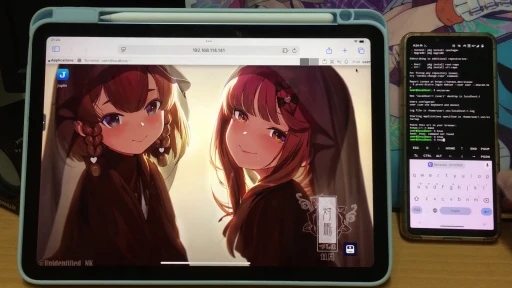
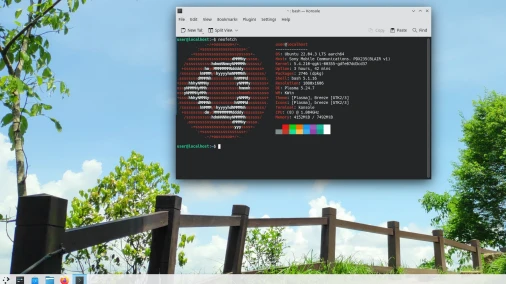
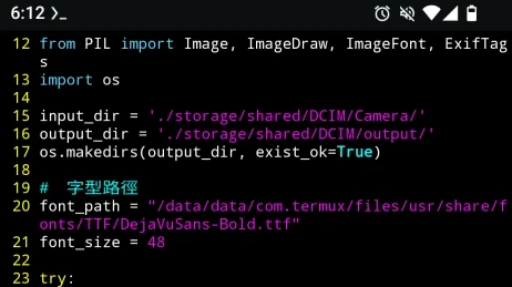
Android 16’s Linux Terminal may not become a Termux killer.
Termux is an Android terminal app developed by a group of open source software enthusiasts, with its own package repository.
After playing with the Debian Terminal on Pixel phones, I have temporarily reached this conclusion. It uses the AVF framework to run a Debian environment, with technology similar to ChromeOS crosvm. It is a complete virtual machine environment isolated from Android, capable of running Systemd and Docker.
However, startup takes some time. And isolation between the virtual machine and the host causes performance degradation.
Although GPU acceleration may be possible, its efficiency probably will not be much higher than Termux. They also have to deal with displaying Linux Wayland windows on Android’s compositor.
If you only want to run CLI programs, Termux is simpler and more efficient, because it has no virtualization layer. All packages are compiled for ARM64. If you suddenly need to open an SSH remote connection, Termux starts the fastest.
Termux’s GPU acceleration can still use Turnip and VriGL.
The more fundamental difference is that their technical architectures are completely different. Termux has always been a native Android app. It merely creates a userspace program, directly executes ARM64 ELF binaries, and has no real virtualization at all. It can access the filesystem with near-native performance and directly use resources provided by the Android system, so startup time is fast, I/O latency is low, and the experience of launching CLI tools is excellent.
Android 16 Linux Terminal takes another path. Judging from its current design, it uses full pKVM virtualization + VirtIO interfaces. Therefore, every launch is effectively booting a Linux virtual machine, and I/O has to go through VirtIO. GPU graphics processing has to handle the long data path of guest -> host -> Android SurfaceFlinger. If the virtual machine wants to use host hardware interfaces (camera, USB, GPU), it needs another translation layer, or may simply be forbidden from accessing them. This complete isolation is of course safe, but the price is that it is hard to expect the experience of “tap and open instantly, enter shell in seconds.”
In terms of performance, if you are only running CLI programs such as Python scripts, SSH, git, or compiling small to medium-sized codebases, Termux will probably be faster, because it interacts directly with the Android kernel and has no virtualization overhead. GPU acceleration is similar: Termux uses Android’s OpenGL and Vulkan acceleration through Turnip/VirGL. Although it is very hacky, at least it runs, and latency is lower after bypassing the virtualization layer.
On security, the objective advantage of the Linux virtual machine is obvious. No matter how Termux is sandboxed, in essence it still runs at the Android app layer, and its attack surface is similar to that of a normal app. AVF is hardware-level isolation, and pKVM can restrict a virtual machine’s DMA privileges, memory visibility, and define which peripherals are available. This should be very helpful for enterprise, tablet, and education markets.
I think this Linux Terminal is more about paving the way for Android tablets to become ChromeOS-like. This way, AVF technology can provide a unified interface for virtualization on ARM processors.